
Since I live in a ground-floor apartment in a multi-unit building, I started out with a Yamaha DTX6K E-drum kit out of consideration for the neighbors living above me. Back then being completely clueless, I was told that the TCS silicone material used for the snare offered a realistic playing feel. After playing on the thing for about three years, I have to admit that it doesn’t actually feel that bad. However, it has too much rebound compared to an acoustic snare drum. I noticed this when I was able to play things on the DTX6 that simply didn’t work on the acoustic kit at my music school. So, after about three years, I set out in search of a more realistic playing feel without generating the volume of an acoustic kit. That was about nine months ago. Since I was prioritizing playing feel, I won’t say much about the kit sounds in this post. They were generally good enough for my untrained ears. I can say right up front, however, that I still prefer playing on an acoustic drum kit above all else.
The original text of this post was created by my human intelligence in German. The translation was a collaboration between man and machine. The man was I and the machine was Google Translate.
A Budget-Friendly Approach: Swapping Only the Snare
My first step was to try replacing just the snare pad with a more realistic snare drum while continuing to use the tom and bass drum pads from the DTX6K, in order to go easy on my wallet.
Mesh Heads
One approach I tried was testing an old, inexpensive snare drum fitted with various mesh head options. For the snare, I used Roland RT-30 side triggers. I also briefly tested the Yamaha DT50S triggers, but they were significantly less sensitive. Due to their design, side triggers naturally cannot detect the exact position of the strike. This means that unlike with an acoustic snare every hit sounds very similar when using these triggers. Regardless of whether I strike the drum at the rim or in the center. The silicone snare pad on the DTX6K, however, can detect this variation. This feature is called positional sensing. While it’s not quite the same as playing an acoustic drum, it’s certainly better than nothing.
What I simply cannot understand is the popularity of those thin, standard mesh heads. They feel like trampolines; the rebound is far too strong. However, I did stumble upon three non-standard variations that I actually don’t think are half bad.
Drum-Tec Real Feel
The “Real Feel” is a 3-ply mesh head from Drum-Tec. I tested this one extensively. As far as rebound goes, it really does come significantly closer to that of an acoustic snare. However, I didn’t care for the overall playing feel. It felt somehow too soft. On the plus side, it is quite quiet. Drum-Tec also offers Hybrid Pro mesh heads, which are said to be louder—and potentially offer a better playing feel. But I haven’t tested those myself. I let myself be swayed by the “Real Feel” name.
Evans dB One
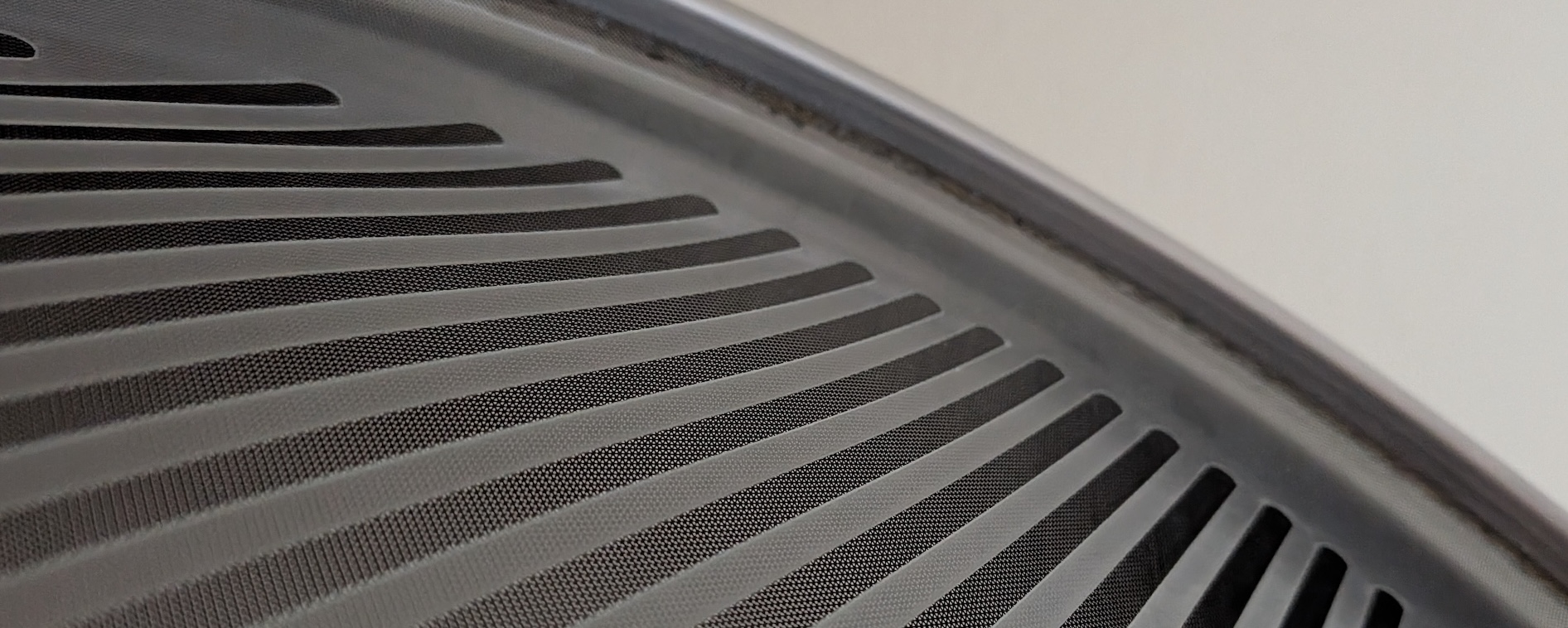
Evans dB One mesh heads feature special reinforcements designed for toms and are pretty quiet. I tested these in a store; while I didn’t find the playing feel to be superb, it was certainly decent enough. The snare version features strange strips embedded within the head. These are intended to simulate the sound of a snare wire, but in reality, they don’t really achieve that effect. Furthermore, the snare version is actually quite loud. However, it does feel quite good to play. Better than the tom heads. I used the snare version on my kit for a while in my apartment with neighbors living nearby and nobody complained. That doesn’t mean it didn’t bother anyone. In any case, this mesh head is nowhere near as loud as an acoustic snare. However, the inherent noise caused by the embedded strips becomes distracting when you connect triggers and use electronic drum sounds. For that, you really need well-isolating headphones.
Evans dB One Snare-Meshhead mit merkwürdigen Streifen
RTOM Black Holes
You simply place the Black Holes on top of the acoustic head. This makes handling them very easy. In terms of playing feel, I thought they were quite good. Perhaps just a tad too bouncy. RTOM offers specialized triggers. These worked right out of the box. However, it remains unclear to me exactly how or even if you can trigger the rim click. For toms, I think the Black Holes are a very viable option.
Whisper Drums
Today, I came across https://whisperdrums.com. They offer drumheads that supposedly feel and sound like acoustic heads but are 20 dB quieter. That sounds very promising. The company is based in Switzerland. While their products are not currently distributed in Germany, hopefully, they will be soon. Nine months ago, I wasn’t even aware of them. If I manage to get my hands on one of these heads, I might just report about them. You can listen to A/B comparison on YouTube. There is also a video from the manufacturer on Youtube.
Practice Pad with Triggers
I also spent some time playing with a Sabian Quiet Tone practice pad paired with the Roland RT30 side-mount trigger. The playing feel was excellent, and the volume was fairly high. Of course, it’s still nowhere near as loud as an acoustic snare. This setup worked well most of the time. Unfortunately, however, it didn’t trigger every time. The longer I used this combination, the more annoying that intermittent triggering became.
Snare Conclusion
If I wanted to upgrade a DTX6K kit to provide a more authentic snare playing feel while keeping the budget as low as possible, I would buy an inexpensive snare drum and equip it with an Evans dB One head or maybe RTOM Black Holes and triggers. I also have a few ideas for improving the triggering on the practice pad. If successful, I might share more about that in a future post. The just discovered Whisper Drums also look very promising.
A More Realistic E-Drum Kit
Since back then I wasn’t happy with any of the budget-friendly compromises regarding the snare drum, I started testing e-drum kits in a higher price range.
Efnote 5-something
I really didn’t like the playing feel of the mesh heads at all. The cymbals were okay. Overall, it didn’t feel particularly good to play, though it sounded good.
Roland TD-27KV2
An incredibly good snare drum. The best electronic snare I’ve ever tested. The playing feel is superb. Highly sensitive and offering a vast range of tonal variation, dependent not only on velocity but also on the specific spot where the stick strikes the drumhead. The toms, with their standard mesh heads, were a complete letdown. The bass drum pad was okay, but nothing special. Unfortunately, the hi-hat on the demo unit in the store wasn’t configured correctly. However, the cymbals felt great. I could definitely have imagined buying this kit though I would have wanted to swap out the stock toms for actual acoustic shells fitted with RTOM Black Holes or Evans dB Ones. Roland has since released some new e-drum kits. I haven’t tested them yet, but I’m not really expecting any kind of revolution there.
Zildjian Alchem-E
The standout feature of this kit was its perforated brass cymbals. They felt fantastic. The cymbal triggering actually worked surprisingly well most of the time. The drums themselves, however, were very disappointing. The mesh heads felt like trampolines. The store I visited actually let me swap out the stock mesh heads for the Real Feel heads just for testing purposes. Unfortunately, the triggering stopped working completely after that. Despite our attempts to adjust the corresponding settings in the module. Zildjian support confirmed that this setup likely wouldn’t work. Given the price point, that was a clear deal-breaker. To this day, I cannot understand how anyone could sell single-ply mesh heads with a rebound feel akin to a trampoline at that price. R&D likely squandered their entire budget on the cymbals. Furthermore, it wasn’t possible to connect other drums to the module. My only idea for how one might absolutely have to use these specific cymbals in conjunction with high-quality drums would be to use two separate modules and link them via MIDI. However, I haven’t tested that approach, and it sounds both overly complicated and far too expensive.
Pearl eMerge
This drum kit hadn’t even crossed my radar during my initial research. In the store it was presented to me as a secret tip. And right from the start, all the drums felt excellent to play. The rebound on the snare is arguably even a bit too low compared to an acoustic snare. With the toms, it’s the other way around: the rebound—particularly on the floor tom—is higher than that of an acoustic floor tom. However, this is still worlds apart from the “trampoline-like” mesh heads offered by the competition. Nor did it feel overly soft or mushy. The cymbals felt good as well, though they were quite loud. By loud, I’m referring to the acoustic impact noise generated when stick meets plastic. Overall, the kit was very noisy. I sometimes played my Yamaha kit through a speaker without headphones. With the Pearl, however, you absolutely need maximum sound isolation headphones. The acoustic impact noise was noticeably quieter on the Roland kit as well. As for the snare comparison of Roland vs. Pearl Roland comes out on top. The Pearl snare doesn’t respond to changes in stick placement with the same level of nuance and variability as the Roland snare does. However, in terms of sensitivity to stick velocity, it certainly holds its own. The bass drum feels excellent and even looks like a proper, small acoustic kick drum. The hardware was very sturdy. Pearl uses the same hardware used on acoustic drum kits. In contrast, getting my Yamaha kit to sit level and stable was no trivial task. On the other hand, the Pearl module did not leave a good impression. I liked the Yamaha module significantly better. In terms of aesthetics, usability, and features such as metronome settings and practice tools there is simply no comparison. Another thing that bothers me somewhat about the Pearl eMerge is that, during, e.g., silent single strokes rolls, the sounds can come across as rather synthetic and even nearly identical depending on the specific drum selected. On a real drum, no two strokes ever sound exactly alike. I actually have an idea for how to improve this using a workaround during post-processing. Perhaps I’ll write something about that in the future.
Conclusion
The following options were on the table for me:
- The Roland snare (from the TD-27 kit) along with the TD-27 module and cymbals paired with acoustic toms fitted with Black Hole mesh heads.
- The Pearl eMerge kit, exactly as it comes out of the box.
Ultimately, the Roland option was too expensive for me. While I do have an acoustic kit stored in my parents’ basement, I would have had to either sacrifice that kit or purchase new drums specifically for this setup. The Pearl won the playing feel ranking including toms and bass drum and we’ve been having fun together almost every day since then.